

Introduction
Lower back pain affects millions of people and is one of the leading causes of discomfort and reduced mobility. Whether you spend long hours sitting at a desk, frequently drive, lift heavy objects, or simply experience age-related stiffness, lower back pain can interfere with daily life.
The good news is that gentle movement often helps. Yoga is widely practiced as a natural way to improve flexibility, strengthen supporting muscles, and reduce tension throughout the body. While yoga is not a substitute for medical treatment, many people find that regular practice helps them manage mild to moderate lower back discomfort more effectively.
In this guide, you’ll discover nine beginner-friendly yoga poses that may help ease lower back stiffness, improve mobility, and support long-term spinal health.
What Causes Lower Back Pain?
Lower back pain can develop for many reasons. Understanding the underlying cause can help you choose appropriate exercises and lifestyle habits.
Common causes include:
- Poor posture
- Sitting for extended periods
- Weak core muscles
- Tight hamstrings and hip flexors
- Lack of physical activity
- Muscle strain
- Stress-related tension
- Improper lifting techniques
Modern lifestyles often contribute significantly to lower back discomfort. Spending hours seated at a desk can tighten the hips and weaken muscles that support the spine.
Can Yoga Help Lower Back Pain?
Yoga combines stretching, strengthening, breathing exercises, and mindfulness. Together, these elements may help:
- Improve flexibility
- Reduce muscle tightness
- Increase spinal mobility
- Strengthen the core
- Improve posture
- Enhance body awareness
- Reduce stress-related tension
Consistency is important. Even practicing for 10–15 minutes daily can contribute to noticeable improvements over time.
1. Child’s Pose (Balasana)
Child’s Pose is a gentle resting posture that helps stretch the lower back and relax the entire body.
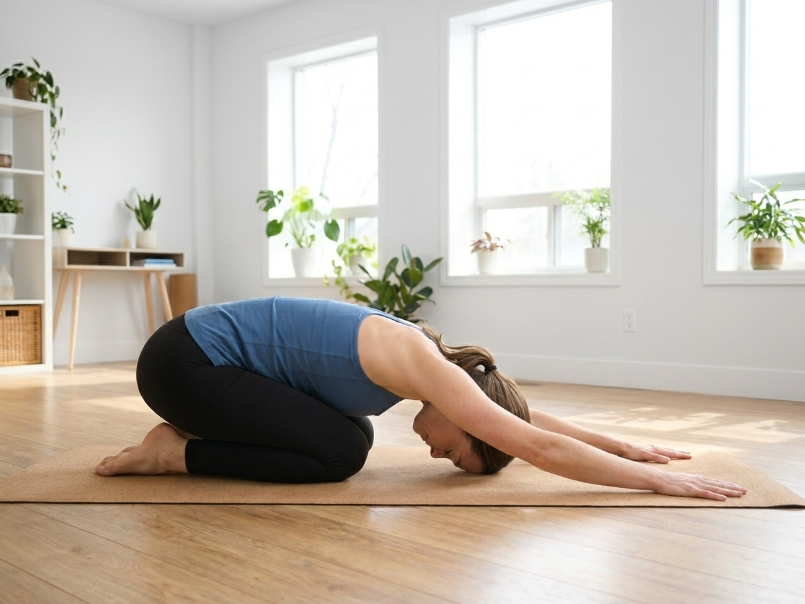
How to Perform Child’s Pose
- Kneel on the floor.
- Sit back onto your heels.
- Extend your arms forward.
- Lower your chest toward the mat.
- Rest your forehead on the floor.
Benefits
- Gently stretches the lower back
- Relieves tension
- Encourages relaxation
- Improves flexibility
Hold for 30–60 seconds while breathing deeply.
2. Cat-Cow Stretch
Cat-Cow is one of the most effective yoga movements for improving spinal mobility.
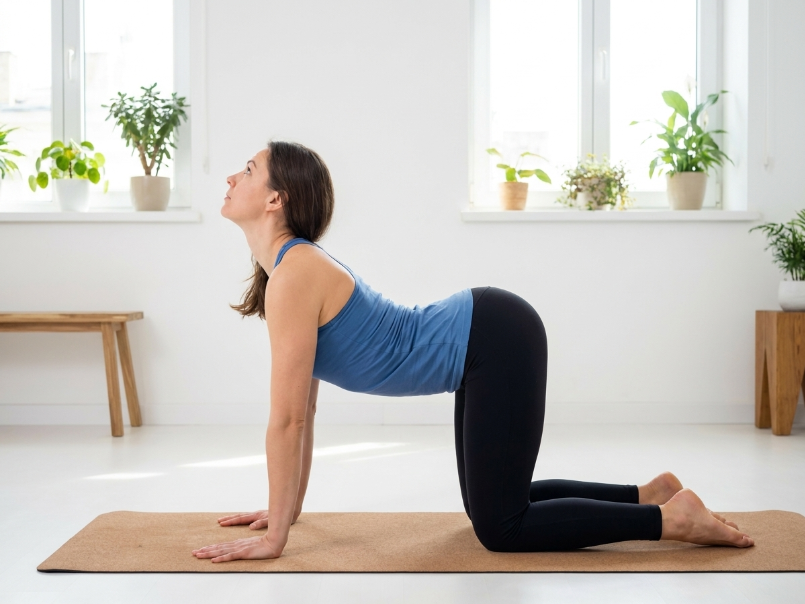
How to Perform Cat-Cow
- Begin on hands and knees.
- Inhale and arch your back while lifting your chest.
- Exhale and round your spine toward the ceiling.
- Continue moving slowly with your breath.
Benefits
- Increases spinal flexibility
- Reduces stiffness
- Improves circulation
- Warms up back muscles
Repeat for one to two minutes.
3. Knees-to-Chest Pose
This simple stretch gently lengthens muscles surrounding the lower back.
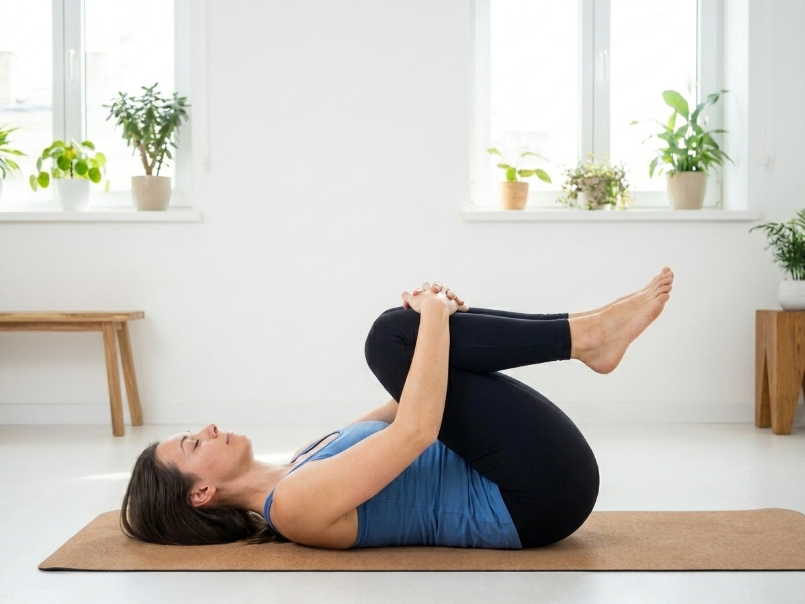
How to Perform
- Lie flat on your back.
- Bring both knees toward your chest.
- Wrap your arms around your legs.
- Hold comfortably.
Benefits
- Relieves lower back tension
- Promotes relaxation
- Improves flexibility
Hold for 30–60 seconds.
4. Supine Spinal Twist
Gentle twisting movements can help improve mobility throughout the spine.
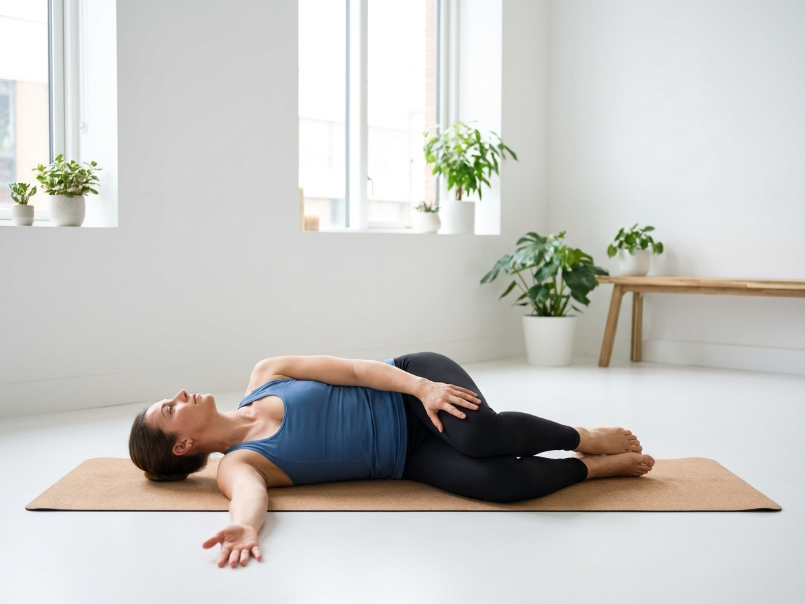
How to Perform
- Lie on your back.
- Bring your knees toward your chest.
- Slowly lower them to one side.
- Keep both shoulders grounded.
- Repeat on the opposite side.
Benefits
- Improves spinal mobility
- Stretches surrounding muscles
- Encourages relaxation
Hold each side for 30 seconds.
5. Sphinx Pose
Sphinx Pose is a beginner-friendly backbend that gently strengthens the lower back.
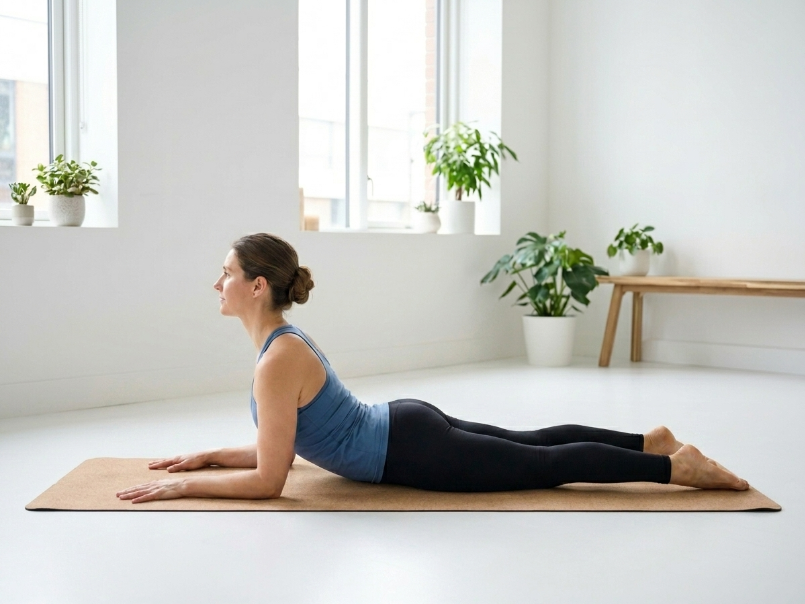
How to Perform
- Lie on your stomach.
- Place your forearms on the floor.
- Lift your chest slightly.
- Relax your shoulders away from your ears.
Benefits
- Encourages healthy spinal extension
- Strengthens lower back muscles
- Improves posture
Hold for 20–30 seconds.
6. Bridge Pose
Bridge Pose strengthens muscles that help support the spine and pelvis.
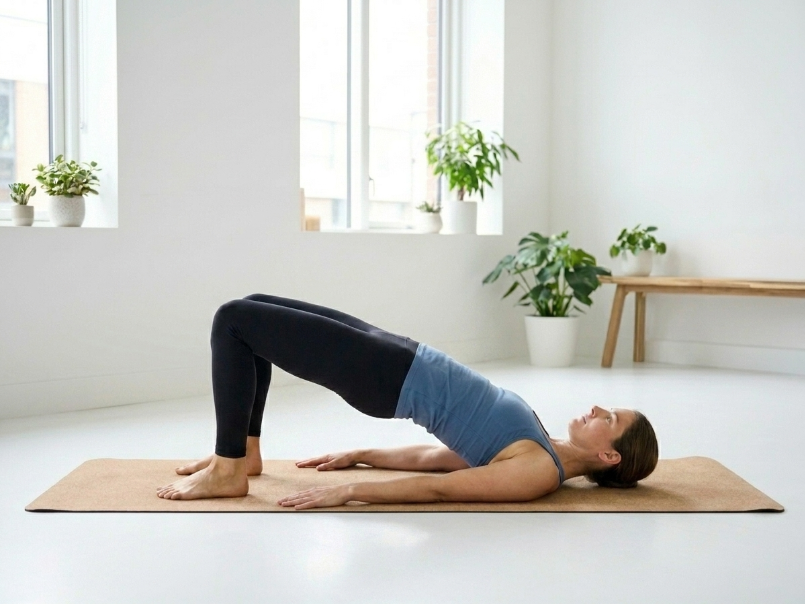
How to Perform
- Lie on your back.
- Bend your knees.
- Place your feet flat on the floor.
- Lift your hips upward.
Benefits
- Strengthens glutes and core
- Supports spinal stability
- Improves posture
Hold for 20–30 seconds and repeat several times.
7. Thread the Needle Pose
This pose targets the hips and glutes, which can influence lower back comfort.
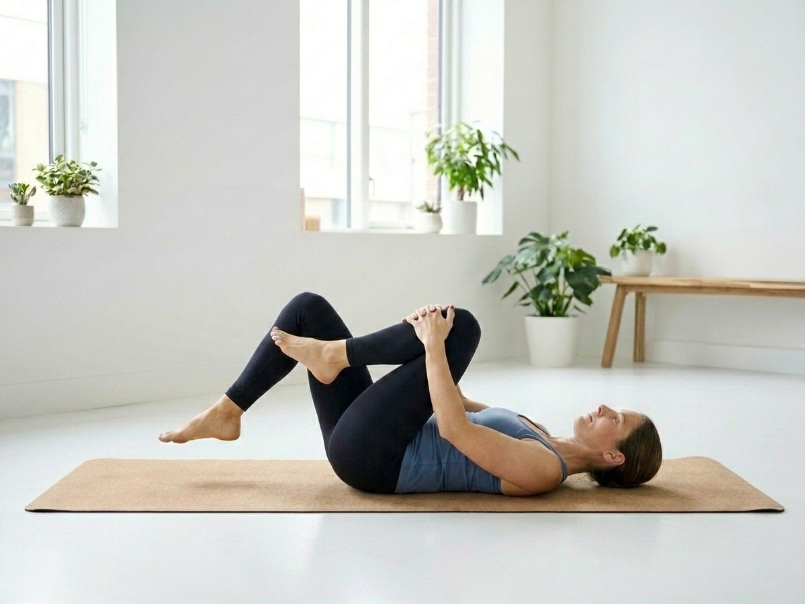
How to Perform
- Lie on your back.
- Cross one ankle over the opposite knee.
- Draw the supporting leg toward your chest.
- Hold and switch sides.
Benefits
- Opens tight hips
- Reduces lower back strain
- Improves flexibility
Hold for 30 seconds per side.
8. Seated Forward Bend
This classic yoga pose stretches the hamstrings and lower back.
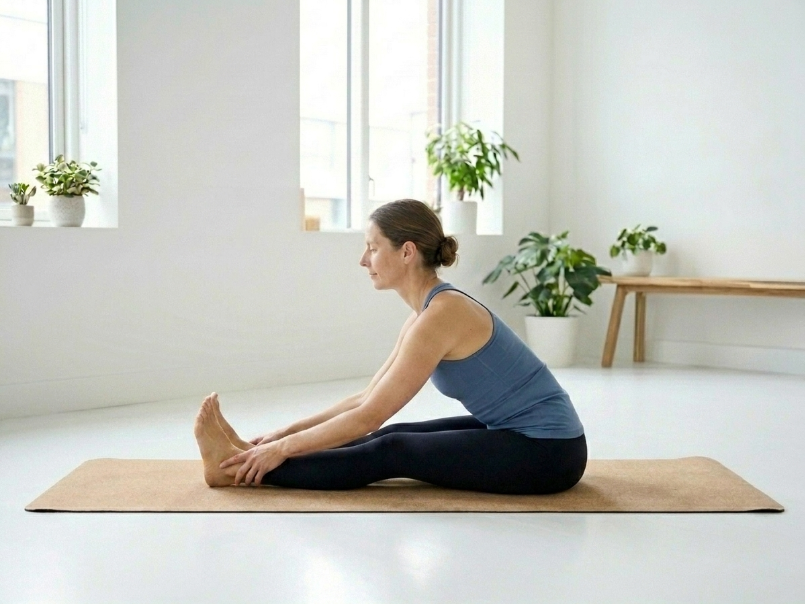
How to Perform
- Sit with legs extended.
- Keep your spine long.
- Slowly hinge forward.
- Reach toward your feet comfortably.
Benefits
- Improves flexibility
- Relieves muscle tightness
- Supports better mobility
Avoid forcing the stretch.
9. Reclining Bound Angle Pose
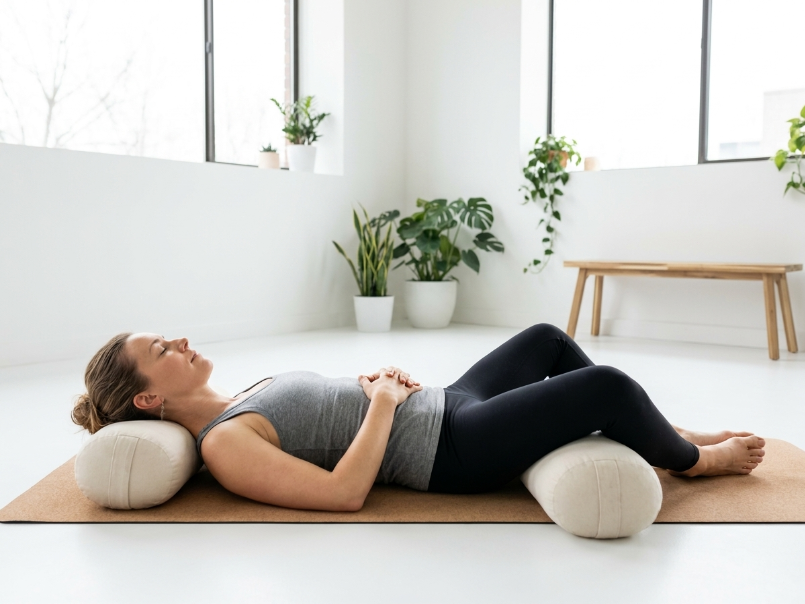
This restorative pose encourages deep relaxation and gentle stretching.
How to Perform
- Lie on your back.
- Bring the soles of your feet together.
- Allow your knees to fall outward.
- Relax and breathe deeply.
Benefits
- Reduces tension
- Encourages relaxation
- Supports recovery
Hold for one to three minutes.
10-Minute Yoga Routine for Lower Back Pain
If you’re short on time, try this simple sequence:
- Child’s Pose – 1 minute
- Cat-Cow Stretch – 2 minutes
- Knees-to-Chest Pose – 1 minute
- Supine Spinal Twist – 2 minutes
- Sphinx Pose – 1 minute
- Bridge Pose – 1 minute
- Reclining Bound Angle Pose – 2 minutes
This routine can be performed in the morning or after a long day of sitting.
Additional Tips for Preventing Lower Back Pain
Yoga works best when combined with healthy daily habits.
Improve Your Posture
Poor posture places unnecessary stress on the spine. Sit with your shoulders relaxed and feet flat on the floor.
Take Movement Breaks
Try standing and stretching every 30–60 minutes if you work at a desk.
Strengthen Your Core
Strong abdominal muscles help support the lower back and reduce strain.
Stay Active
Walking, swimming, and light exercise can complement your yoga routine.
Manage Stress
Stress often contributes to muscle tension, especially around the neck, shoulders, and lower back.
Common Mistakes to Avoid
When practicing yoga for lower back pain, avoid:
- Forcing stretches
- Holding your breath
- Moving too quickly
- Ignoring pain signals
- Practicing advanced poses too soon
Yoga should feel gentle and controlled. Mild stretching sensations are normal, but sharp pain is not.
When to Seek Medical Advice
Consult a healthcare professional if you experience:
- Severe pain
- Persistent symptoms
- Numbness or tingling
- Weakness in the legs
- Loss of bladder or bowel control
- Pain following an injury
These symptoms may indicate a condition that requires medical evaluation.
Frequently Asked Questions
Is yoga good for lower back pain?
Many people find that yoga helps improve flexibility, posture, and muscle strength, which may reduce lower back discomfort.
How often should I do yoga for lower back pain?
Beginners can start with 10–15 minutes daily or three to five sessions per week.
Which yoga pose is best for lower back pain?
Child’s Pose, Cat-Cow Stretch, and Knees-to-Chest Pose are among the most beginner-friendly options.
Can yoga make lower back pain worse?
Incorrect technique or pushing beyond your limits can increase discomfort. Always move slowly and stop if you experience pain.
Conclusion
Lower back pain can affect nearly every aspect of daily life, but gentle yoga may help improve mobility, reduce stiffness, and support overall spinal health. The nine poses discussed in this guide are beginner-friendly and require little equipment, making them accessible for most people.
Remember that consistency matters more than intensity. Practicing a few minutes each day may lead to gradual improvements in flexibility, posture, and comfort. Combined with healthy lifestyle habits, yoga can become a valuable tool for supporting a stronger and healthier back.
