

Do your hamstrings feel tight every time you bend forward, walk up stairs, or finish a workout? You’re not alone. Tight hamstrings are one of the most common flexibility issues, especially among people who spend long hours sitting, exercise regularly, or have limited stretching habits.
When your hamstrings lose flexibility, everyday movements can become more difficult. You may notice stiffness after sitting, reduced range of motion during workouts, or discomfort when reaching for your toes. Over time, tight hamstrings may also contribute to poor posture and affect how comfortably you move.
The good news is that gentle yoga can help improve hamstring flexibility safely. Unlike aggressive stretching, yoga combines controlled movement, mindful breathing, and gradual muscle lengthening, making it an excellent option for beginners.
In this guide, you’ll learn seven beginner-friendly yoga poses that target the hamstrings while also stretching the calves, hips, and lower back. You’ll also find step-by-step instructions, common mistakes to avoid, safety tips, and a simple routine you can practice at home.
Why Do Hamstrings Become Tight?
Your hamstrings are a group of three muscles located along the back of your thighs. They help bend your knees, extend your hips, and support many everyday movements like walking, climbing stairs, and bending over.
Several factors can cause these muscles to become tight:
Sitting for Long Hours
Spending most of the day sitting at a desk, driving, or relaxing on the couch keeps your hamstrings in a shortened position. Over time, this can reduce flexibility and make the muscles feel stiff.
Lack of Regular Stretching
If you rarely stretch after workouts or throughout the week, your hamstrings may gradually lose their natural range of motion.
Exercise Without Recovery
Running, cycling, strength training, and high-intensity workouts repeatedly challenge the hamstrings. Without proper recovery and stretching, they can become tight.
Poor Movement Habits
Limited physical activity and poor posture can reduce mobility in your hips and legs, placing additional tension on the hamstrings.
Natural Aging
As we age, muscles and connective tissues naturally become less elastic. Regular stretching and yoga can help maintain flexibility and comfortable movement.
Benefits of Yoga for Tight Hamstrings
Practicing yoga consistently offers more than just improved flexibility. Over time, it can support healthier movement patterns and help you feel more comfortable during everyday activities.
Some of the benefits include:
- Improves hamstring flexibility gradually and safely
- Increases overall leg mobility
- Helps reduce muscle stiffness after sitting or exercising
- Supports better posture and movement quality
- Encourages mindful breathing and relaxation during stretching
- Complements strength training and running routines
- May help make everyday activities like bending, walking, and climbing stairs feel easier
Remember that flexibility takes time. Practicing a few times each week is generally more effective than trying to force a deep stretch in a single session.
Safety Tips Before You Begin
Before trying these yoga poses, keep these simple tips in mind:
- Warm up with 3–5 minutes of light walking or gentle movement.
- Stretch only until you feel mild tension—not sharp pain.
- Avoid bouncing during stretches.
- Keep breathing slowly and steadily throughout each pose.
- Bend your knees slightly if you cannot comfortably straighten your legs.
- If you have a recent hamstring injury or significant pain, speak with a healthcare professional before starting a new exercise routine.
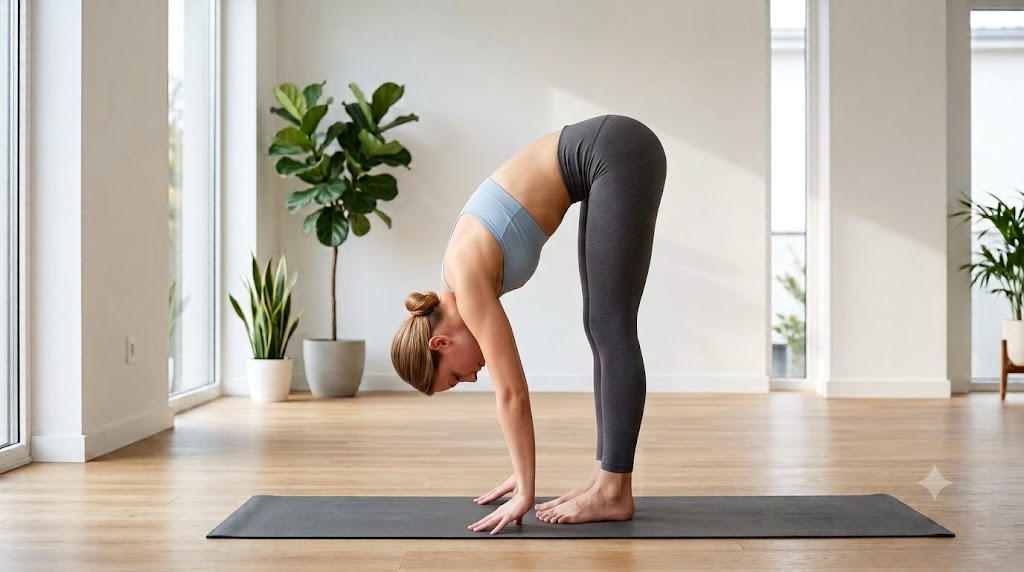
1. Standing Forward Fold (Uttanasana)
Why It Helps
Standing Forward Fold is one of the most effective beginner yoga poses for gently lengthening the hamstrings. It also stretches the calves and lower back while encouraging your body to relax into the movement rather than forcing flexibility.
How to Do It
- Stand with your feet about hip-width apart.
- Inhale and lengthen your spine.
- Exhale as you hinge forward from your hips.
- Let your hands rest on your shins, ankles, yoga blocks, or the floor.
- Keep a slight bend in your knees if your hamstrings feel tight.
- Relax your neck and shoulders while breathing slowly.
Hold Time
Hold for 30–60 seconds while taking slow, deep breaths.
Beginner Tip
Don’t worry about touching your toes. Focus on maintaining a long spine instead of forcing the stretch.
Common Mistakes
- Locking the knees
- Rounding the lower back excessively
- Holding your breath
- Pulling yourself deeper into the stretch
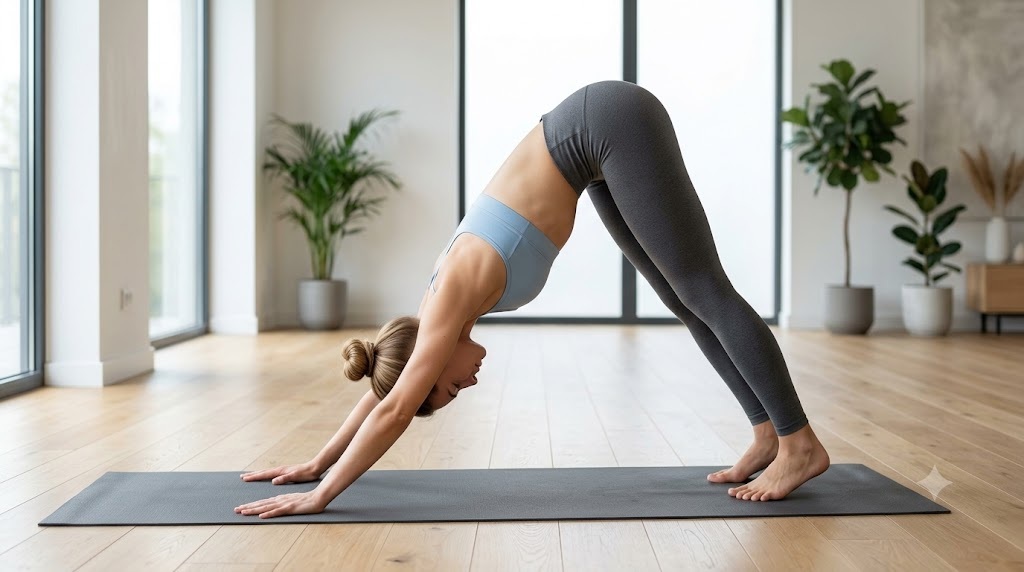
2. Downward-Facing Dog (Adho Mukha Svanasana)
Why It Helps
Downward-Facing Dog stretches the hamstrings, calves, shoulders, and spine simultaneously. Because you can gently bend and straighten your knees, it’s an excellent pose for gradually improving hamstring flexibility.
How to Do It
- Begin on your hands and knees.
- Place your hands shoulder-width apart and your knees hip-width apart.
- Press firmly through your palms.
- Lift your hips toward the ceiling to form an inverted “V.”
- Keep your spine long and your head relaxed between your arms.
- Bend your knees slightly if your heels don’t reach the floor.
Hold Time
Stay in the pose for 30–45 seconds while breathing steadily.
Beginner Tip
It’s perfectly normal if your heels don’t touch the floor. Prioritize keeping your back long over forcing your legs straight.
Common Mistakes
- Rounding the upper back
- Locking the knees
- Collapsing into the shoulders
- Looking forward instead of relaxing the neck
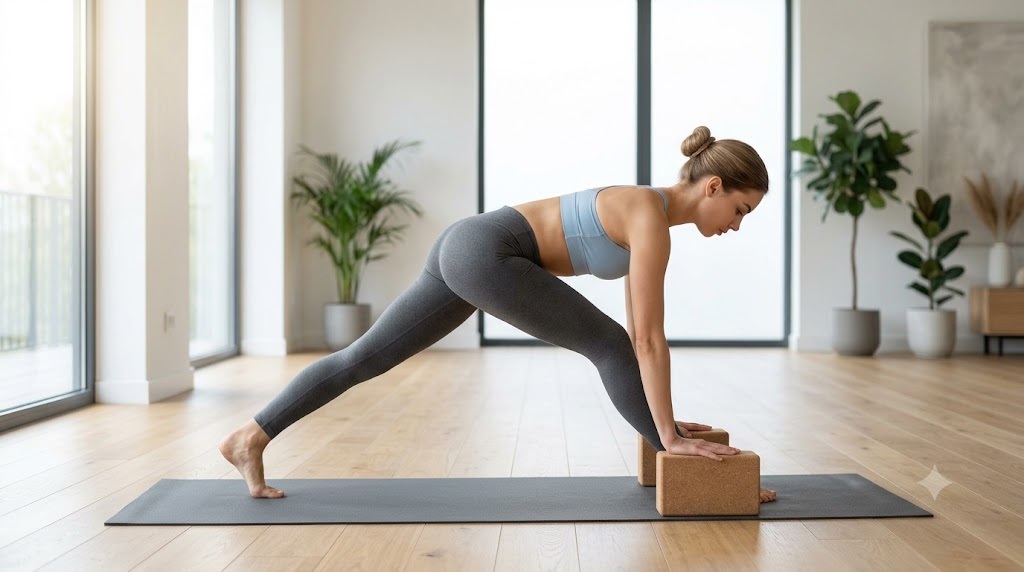
3. Pyramid Pose (Parsvottanasana)
Why It Helps
Pyramid Pose is one of the best yoga poses for targeting each hamstring individually. Unlike stretches that work both legs at the same time, this pose allows you to focus on one leg, helping improve flexibility while also stretching the calves and supporting better balance.
If one hamstring feels tighter than the other—which is common—Pyramid Pose can help you work on each side independently.
How to Do It
- Stand tall at the front of your yoga mat.
- Step your left foot back about 2–3 feet.
- Keep both hips facing forward.
- Straighten your front leg while keeping a slight bend in the knee if needed.
- Place your hands on your hips or on yoga blocks for support.
- Inhale to lengthen your spine.
- Exhale as you slowly hinge forward from your hips over your front leg.
- Keep your back as flat as possible while looking toward your shin or the floor.
Hold Time
Hold for 30–45 seconds on each side while breathing slowly.
Beginner Modification
If reaching the floor feels difficult, place yoga blocks under your hands. You can also shorten your stance to make the stretch more comfortable.
Common Mistakes
- Locking the front knee
- Twisting the hips sideways
- Rounding the upper back
- Trying to reach the floor instead of maintaining good alignment
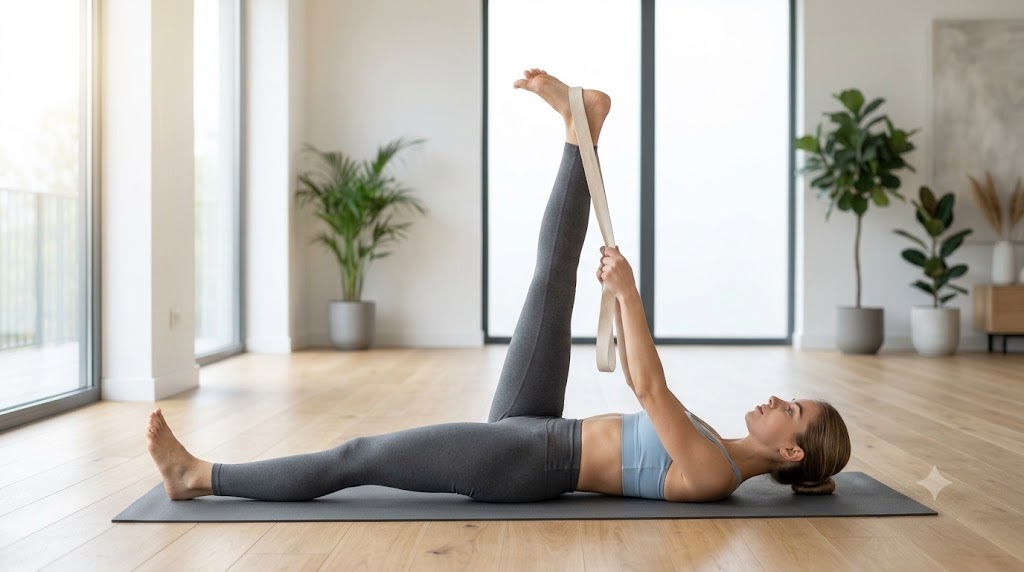
4. Reclining Hand-to-Big-Toe Pose (Supta Padangusthasana)
Why It Helps
This gentle floor-based stretch isolates the hamstrings without placing pressure on your lower back. Because you’re lying down, it’s easier to relax and focus on gradually improving flexibility. It’s especially helpful for beginners or anyone recovering from muscle tightness after exercise.
How to Do It
- Lie comfortably on your back.
- Extend both legs straight.
- Bend your right knee toward your chest.
- Loop a yoga strap or towel around the ball of your right foot.
- Slowly straighten your right leg toward the ceiling.
- Keep your left leg extended on the mat.
- Hold the strap with both hands while relaxing your shoulders.
- Only straighten your leg as far as feels comfortable.
Hold Time
Hold for 30–60 seconds before switching sides.
Beginner Modification
Don’t worry if your raised leg doesn’t become completely straight. A slight bend in the knee still provides an excellent stretch.
Common Mistakes
- Pulling the leg too aggressively
- Lifting the opposite hip off the floor
- Locking the knee
- Holding your breath
5. Seated Forward Bend (Paschimottanasana)
Why It Helps
Seated Forward Bend is one of the most well-known yoga poses for improving hamstring flexibility. It provides a deep stretch along the entire back of the legs while also encouraging length through the spine. When practiced patiently, it can help reduce muscle tightness and gradually increase your range of motion.
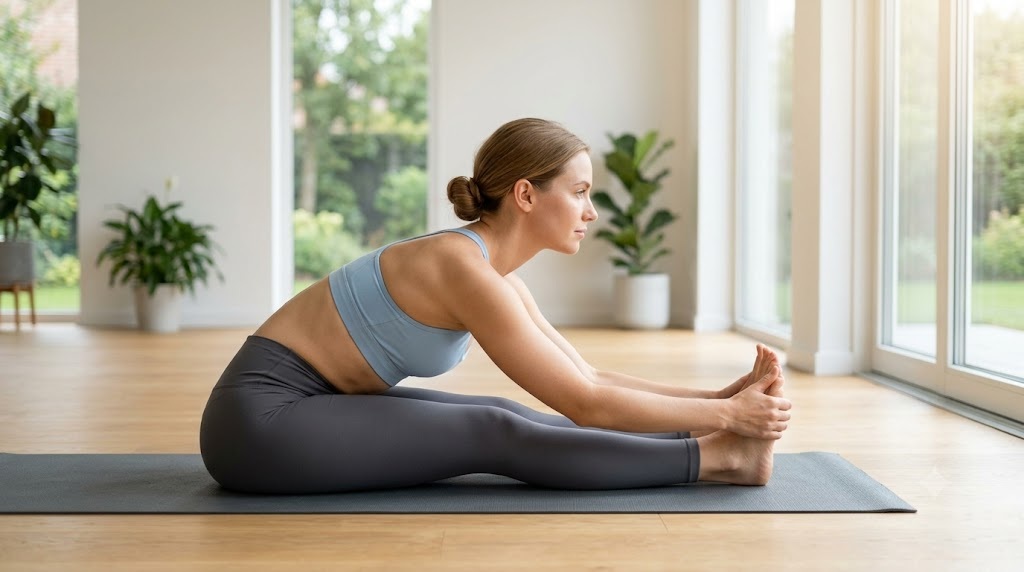
How to Do It
- Sit on your yoga mat with both legs extended straight in front of you.
- Sit tall with your shoulders relaxed.
- Inhale and lengthen your spine.
- Exhale as you hinge forward from your hips.
- Reach for your shins, ankles, feet, or a yoga strap—wherever feels comfortable.
- Keep your chest lifted instead of collapsing toward your legs.
- Allow your body to relax into the stretch with each breath.
Hold Time
Stay in the pose for 45–60 seconds while breathing slowly.
Beginner Modification
Place a folded blanket under your hips to help tilt your pelvis forward. If needed, bend your knees slightly to reduce tension in the hamstrings.
Common Mistakes
- Rounding the spine excessively
- Forcing yourself to touch your toes
- Locking the knees
- Holding tension in the shoulders or neck
Tips to Get Better Results
If your goal is to improve hamstring flexibility, consistency matters more than intensity. Rather than stretching hard once a week, aim to practice these poses 3–5 times per week. Over time, your muscles adapt gradually, making movement feel easier and more comfortable.
Here are a few habits that can help:
- Warm up before stretching with light walking or gentle movement.
- Focus on slow, steady breathing during every pose.
- Stretch to a comfortable level of tension—never sharp pain.
- Stay patient and avoid comparing your flexibility to others.
- Practice regularly instead of trying to make rapid progress in one session.
Many people notice small improvements after a few weeks of consistent practice, while larger gains in flexibility often develop over several months.
6. Wide-Legged Forward Fold (Prasarita Padottanasana)
Why It Helps
Wide-Legged Forward Fold is an excellent yoga pose for stretching both hamstrings at the same time while also improving flexibility in the inner thighs and hips. Because your feet are placed wider apart, the stretch is distributed more evenly across the backs of your legs, making it a great addition to any hamstring mobility routine.
This pose also encourages good posture by lengthening the spine and can help you feel less stiff after long periods of sitting.
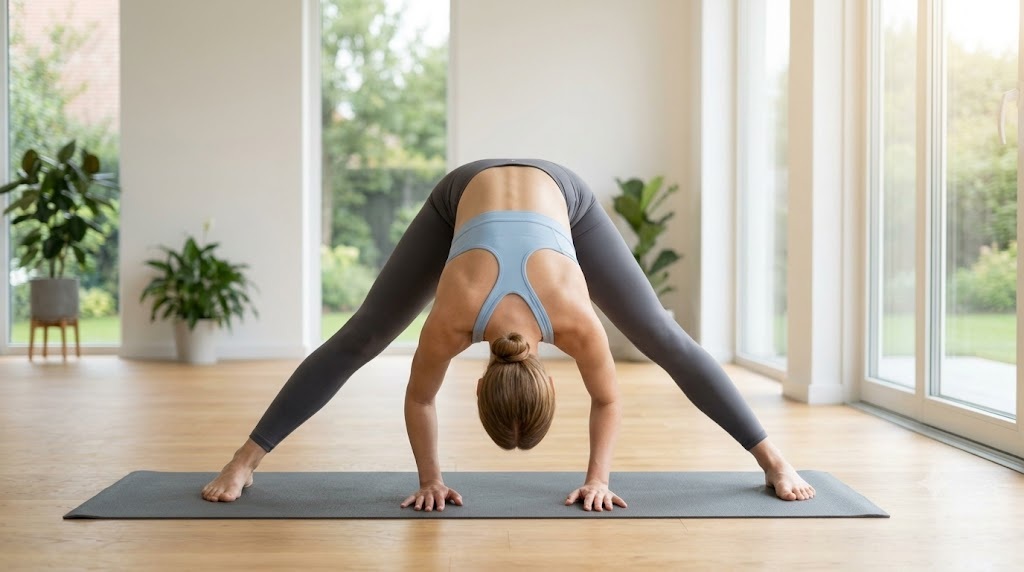
How to Do It
- Stand with your feet about 3–4 feet apart.
- Point your toes slightly inward.
- Place your hands on your hips.
- Inhale to lengthen your spine.
- Exhale and slowly hinge forward from your hips.
- Place your hands on the floor, yoga blocks, or your ankles.
- Let your head relax while keeping your spine long.
- Keep a slight bend in your knees if your hamstrings feel very tight.
Hold Time
Hold the pose for 30–60 seconds while taking slow, deep breaths.
Beginner Modification
If you can’t comfortably reach the floor, place two yoga blocks under your hands. You can also reduce the distance between your feet until the stretch feels manageable.
Common Mistakes
- Locking the knees completely
- Rounding the lower back
- Shifting too much weight into the heels
- Looking forward and creating tension in the neck
7. Half Splits Pose (Ardha Hanumanasana)
Why It Helps
Half Splits Pose is one of the most effective beginner-friendly yoga stretches for improving hamstring flexibility. Unlike a full split, this pose gently isolates one hamstring at a time, allowing you to control the intensity of the stretch.
It is commonly included in yoga classes because it helps improve flexibility while also increasing hip mobility and supporting healthy movement patterns.
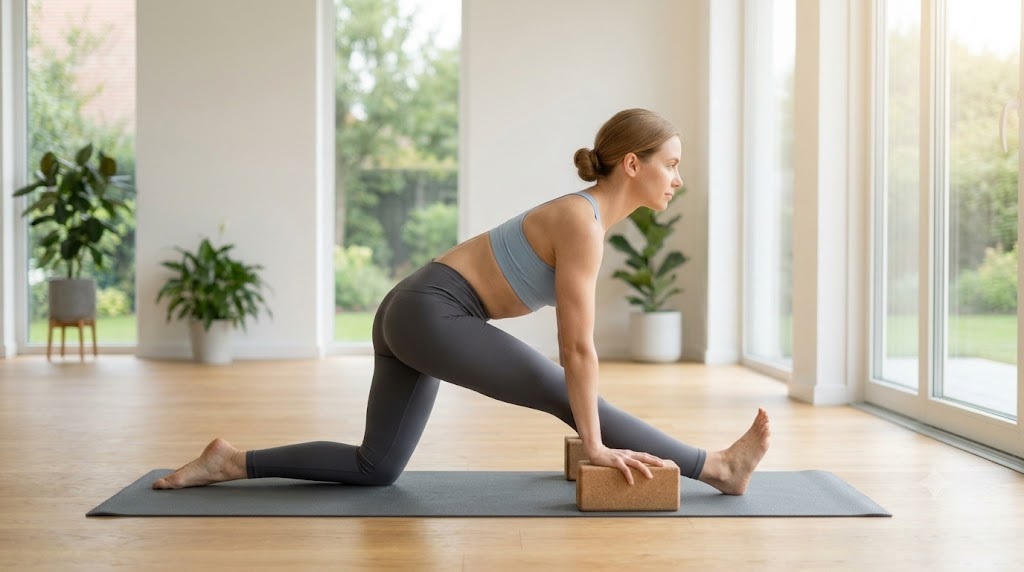
How to Do It
- Begin in a Low Lunge position.
- Slowly shift your hips backward.
- Straighten your front leg while keeping a slight bend in the knee if needed.
- Flex your front foot so your toes point toward the ceiling.
- Place your hands on the floor or yoga blocks.
- Lengthen your spine.
- Fold forward slightly from your hips while keeping your back flat.
- Breathe slowly and relax into the stretch.
Hold Time
Hold for 30–45 seconds on each side.
Beginner Modification
Using yoga blocks under your hands can make the pose much more comfortable while helping you maintain proper alignment.
Common Mistakes
- Rounding the back
- Locking the front knee
- Leaning too far forward
- Holding the breath throughout the stretch
10-Minute Yoga Routine for Tight Hamstrings
If you’re short on time, you don’t need an hour-long yoga session to improve flexibility. This simple 10-minute routine combines all seven poses into a balanced sequence that stretches the hamstrings, calves, hips, and lower back.
| Pose | Time |
|---|---|
| Standing Forward Fold | 1 minute |
| Downward-Facing Dog | 1 minute |
| Pyramid Pose | 1 minute each side |
| Reclining Hand-to-Big-Toe Pose | 1 minute each side |
| Seated Forward Bend | 2 minutes |
| Wide-Legged Forward Fold | 1 minute |
| Half Splits Pose | 1 minute each side |
Practice this routine 3–5 times per week for the best results. Remember that flexibility develops gradually, so consistency is more important than stretching as deeply as possible.
Common Mistakes That Can Slow Your Progress
Even the best yoga routine won’t be as effective if you’re making common stretching mistakes. Avoid these habits to protect your muscles and improve flexibility safely.
1. Stretching Cold Muscles
Always warm up with a few minutes of walking or gentle movement before stretching. Warm muscles respond much better than cold ones.
2. Forcing the Stretch
You should feel gentle tension—not sharp pain. Trying to push beyond your current flexibility can increase the risk of injury.
3. Holding Your Breath
Many beginners unknowingly hold their breath while stretching. Instead, take slow, steady breaths to help your muscles relax.
4. Locking Your Knees
Keeping your knees completely straight may place unnecessary stress on your joints. A slight bend often allows for a safer and more effective stretch.
5. Rushing Through the Routine
Yoga isn’t a race. Holding each pose for the recommended time allows your muscles to gradually relax and lengthen.
6. Only Stretching Once in a While
One yoga session won’t permanently improve flexibility. Consistent practice several times a week produces the best long-term results.
When Should You Stop Stretching?
Although mild muscle tension is normal during yoga, stop immediately if you experience:
- Sharp or stabbing pain
- A sudden popping sensation
- Significant swelling
- Numbness or tingling
- Pain that continues long after stretching
If you have a recent hamstring injury, severe pain, or difficulty walking, consult a qualified healthcare professional before beginning a new exercise routine.
Who Can Benefit from This Yoga Routine?
This beginner-friendly yoga routine is suitable for many people who want to improve flexibility and move more comfortably. You may benefit from these hamstring stretches if you:
- Spend long hours sitting at a desk
- Work in a physically demanding job
- Run, cycle, or participate in sports regularly
- Feel stiff when bending forward
- Have difficulty touching your toes
- Want to improve your overall flexibility
- Are new to yoga and looking for gentle stretches
- Want to support healthy movement as part of your fitness routine
Whether your goal is to feel more flexible, recover after exercise, or simply reduce everyday muscle tightness, practicing these poses consistently can help you make gradual progress.
How Long Does It Take to Improve Hamstring Flexibility?
One of the most common questions beginners ask is how quickly they’ll notice results.
The answer depends on factors such as your current flexibility, age, activity level, and how consistently you practice. Most people begin noticing small improvements after 2–4 weeks of regular stretching, while more significant gains often take 8–12 weeks.
Instead of forcing deeper stretches, focus on practicing three to five times each week. Gentle, consistent stretching is far more effective than pushing your muscles too hard during occasional workouts.
Remember that flexibility is a gradual process, and everyone’s progress looks different.
Frequently Asked Questions
Can yoga really help tight hamstrings?
Yes. Regular yoga combines gentle stretching with controlled breathing and mindful movement, which can gradually improve hamstring flexibility and overall mobility. Consistency is the key to seeing long-term improvements.
How often should I practice yoga for tight hamstrings?
For most beginners, practicing 3–5 times per week works well. Even a short 10-minute routine performed consistently can help improve flexibility over time.
Should stretching feel painful?
No. You should feel a gentle stretch or mild tension, but never sharp pain. If a pose causes pain, ease out of the stretch and modify the position.
Can beginners do these yoga poses?
Absolutely. Every pose in this guide includes beginner-friendly modifications, making the routine suitable for people who are new to yoga or have limited flexibility.
Is it better to stretch before or after exercise?
Both can be helpful, but many people find it more comfortable to perform deeper stretches after a workout when the muscles are already warm. If stretching before exercise, begin with a gentle warm-up and avoid forcing deep stretches.
Why are my hamstrings always tight?
Common causes include prolonged sitting, limited stretching, intense exercise, poor movement habits, and natural age-related changes in muscle flexibility. Regular yoga can help improve mobility over time.
Can tight hamstrings affect other parts of the body?
Tight hamstrings can influence how you move and may contribute to increased tension around the hips and lower back. Improving flexibility can support more comfortable movement and better overall mobility.
Can I do this routine every day?
Yes. As long as you stretch gently and avoid pain, many people can safely practice these poses daily. If your muscles feel particularly sore, consider taking a rest day or reducing the intensity of your stretches.
Final Thoughts
Tight hamstrings are incredibly common, but they don’t have to limit your movement or comfort. With patience and regular practice, yoga can help improve flexibility, reduce muscle tightness, and make everyday activities feel easier.
The seven poses in this guide are simple enough for beginners while still offering meaningful benefits for more experienced practitioners. Focus on moving slowly, breathing deeply, and listening to your body instead of trying to achieve the deepest stretch possible.
Remember that lasting flexibility develops through consistency rather than intensity. Practicing your routine several times each week is one of the best ways to support healthy movement over the long term.
Whether you’re looking to touch your toes, recover after workouts, or simply feel less stiff throughout the day, these yoga poses provide a safe and effective place to start.
Related Articles You May Enjoy
To continue improving your flexibility and mobility, explore these beginner-friendly guides on our website:
- Yoga for Tight Hips: 7 Beginner-Friendly Poses to Improve Flexibility and Relieve Hip Pain
- Yoga for Lower Back Pain: 9 Gentle Poses to Relieve Stiffness and Improve Mobility
- 7 Yoga Stretches for Office Workers With Tight Hips
- Yoga for Beginners at Home: 5 Essential Poses
These articles complement your hamstring routine and can help you build a well-rounded yoga practice.

Great content! Keep up the good work!