

Yoga can boost flexibility and relieve tension even for newcomers. A gentle routine helps improve posture and mobility. These five basic poses are beginner-friendly and can be done at home or in any quiet space. Each pose comes with simple steps and key benefits.
1) Mountain Pose (Tadasana) :
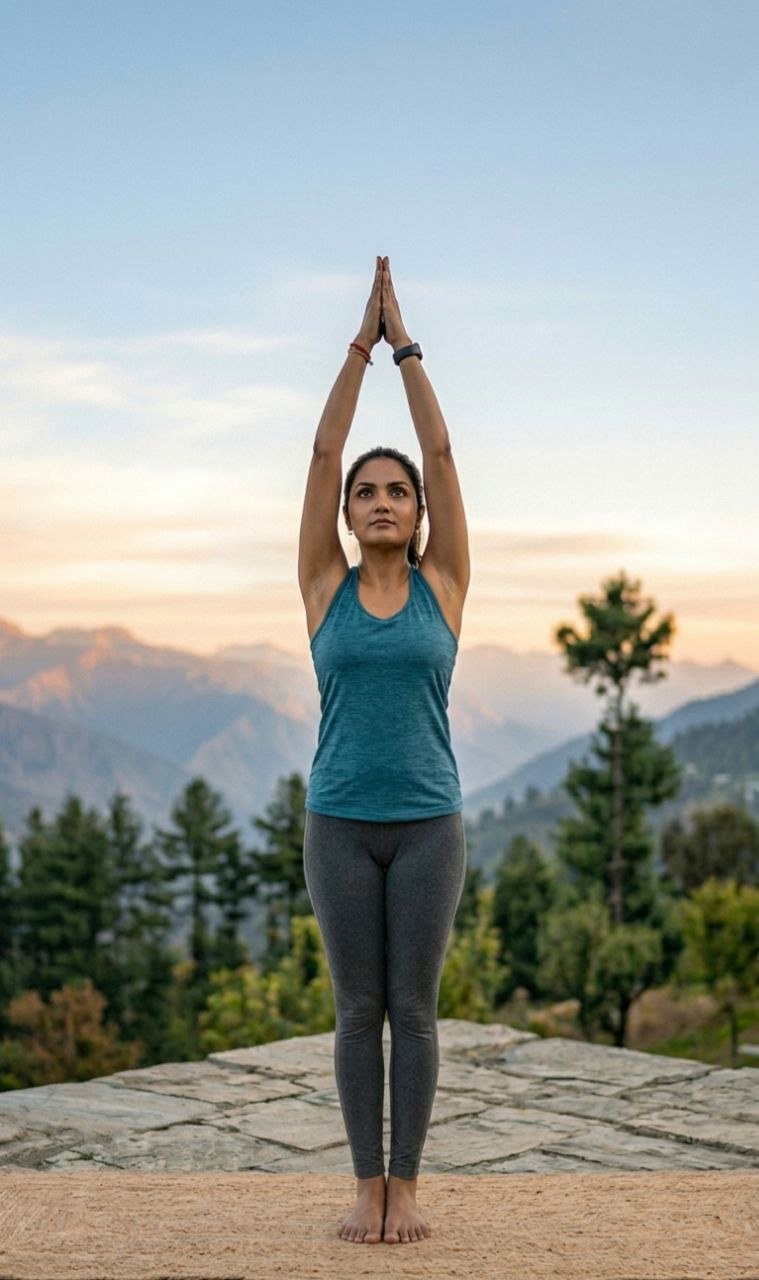
Stand tall with feet together, spine straight. Distribute weight evenly through feet, engage core, and relax shoulders.
Benefits:
Serves as the foundational posture that improves posture, tones the core, and builds body awareness. It also sets the alignment for all standing poses, helping beginners focus on balance and alignment.
2) Cat-Cow Stretch (Bitilasana/Marjaryasana) :
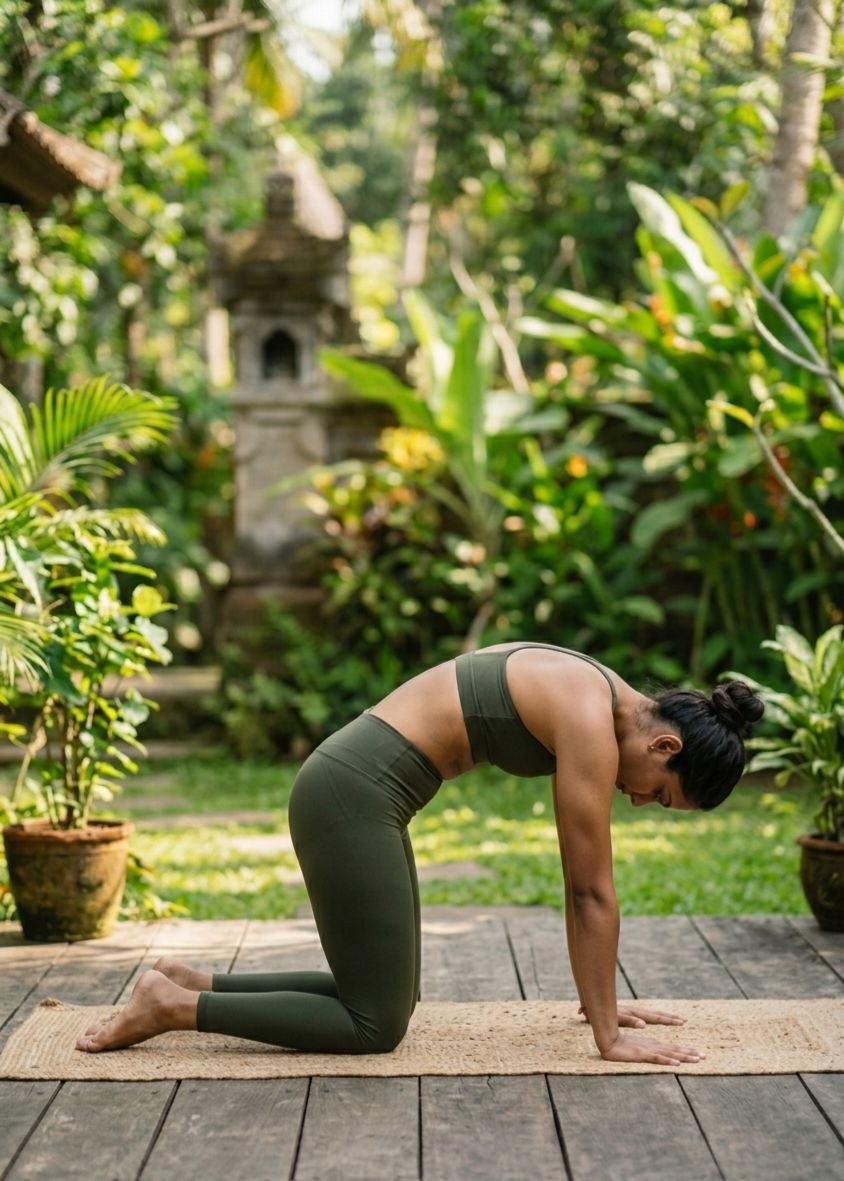
Start on all fours, hands under shoulders, knees under hips. Inhale to arch your back (cow), lifting chest and tailbone; exhale to round the back (cat), tucking chin and tailbone. Repeat slowly for 30–60 seconds.
Benefits:
This fluid movement warms up the spine and core, improving flexibility in the back, neck, and shoulders. It’s great for waking up the spine, relieving lower back tension and enhancing coordination.
3) Downward-Facing Dog (Adho Mukha Svanasana) :
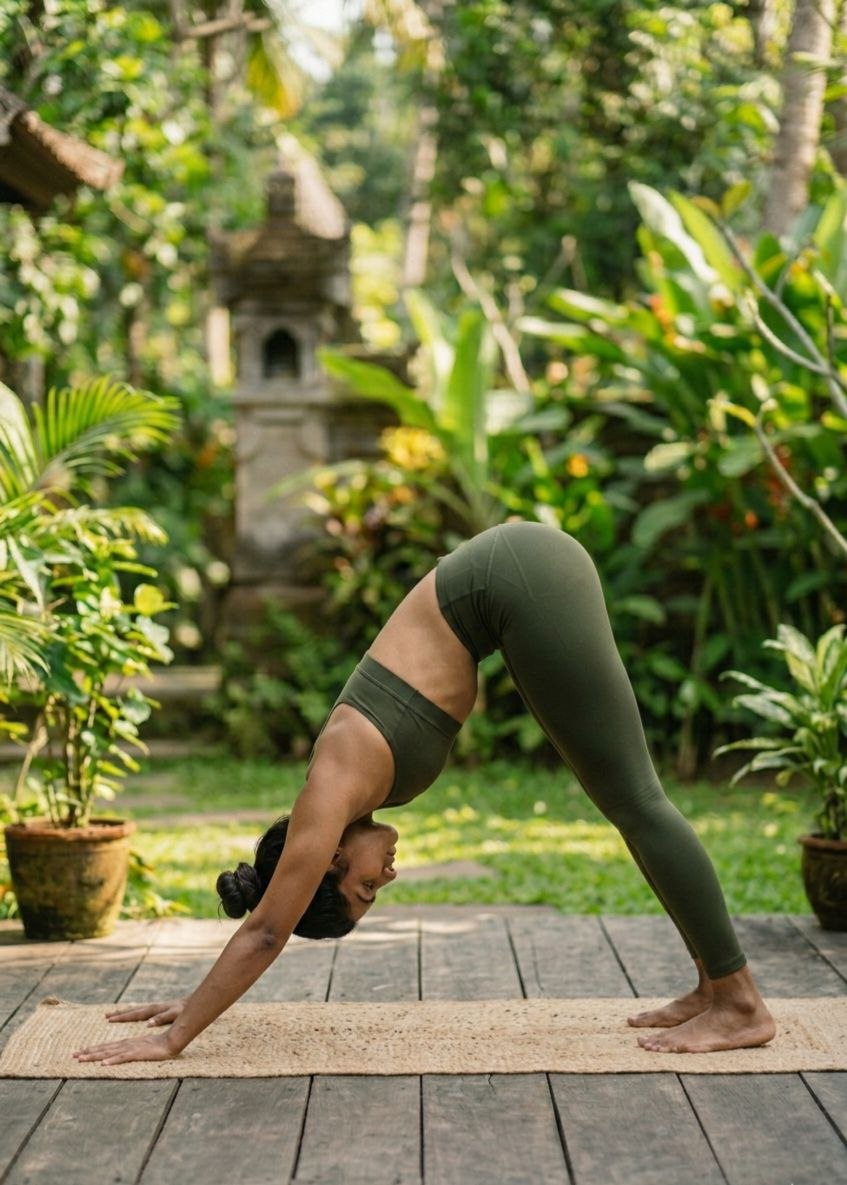
From hands and knees, lift hips up and back into an inverted “V”. Keep arms and legs straight (bend knees slightly if needed), pressing heels toward the floor. Hold 15–30 seconds.
Benefits:
Provides a full-body stretch and strengthens the shoulders, arms, and legs. It elongates the spine, hamstrings, and calves, relieving tightness from sleeping or sitting. Downward Dog also increases blood flow to the brain, helping beginners feel more alert.
4) Child’s Pose (Balasana) :
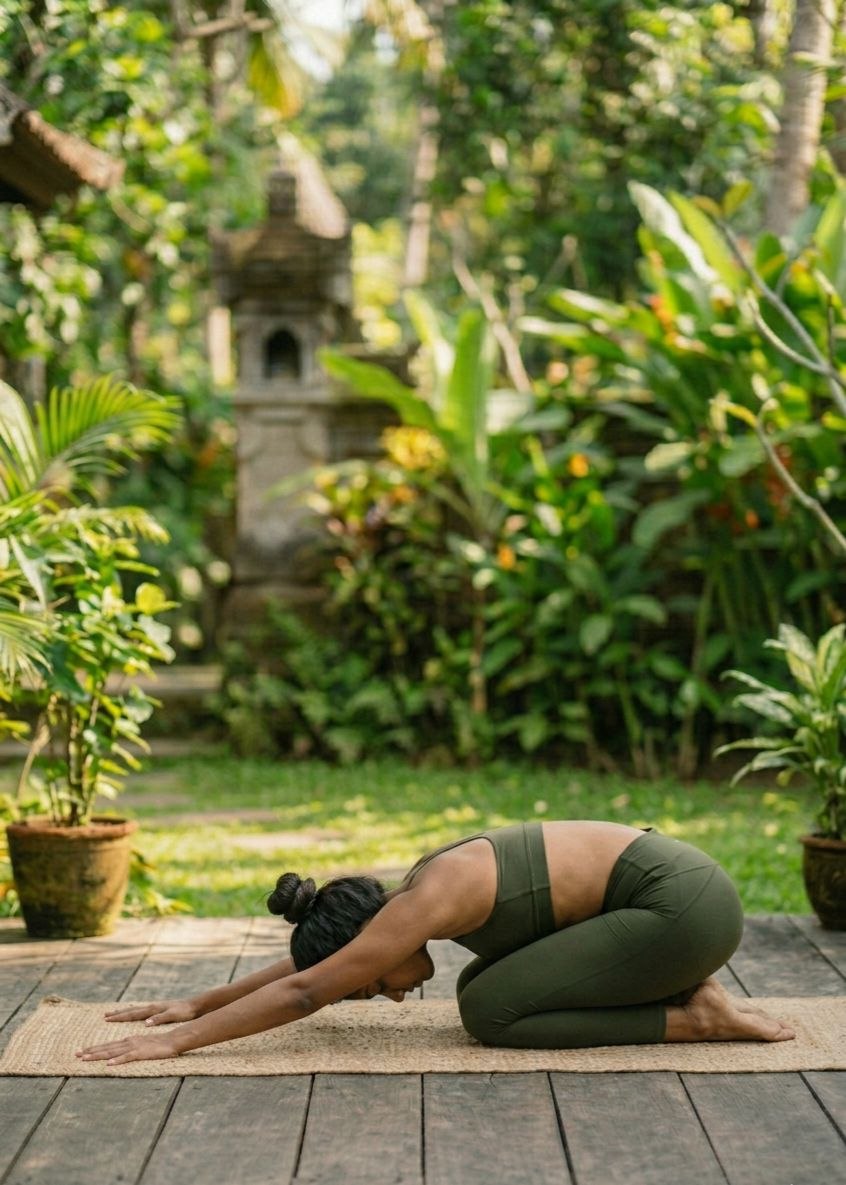
Kneel on the mat, sit back on heels and fold forward. Extend arms overhead or alongside your body; rest forehead on the floor. Hold for 30+ seconds.
Benefits:
A gentle resting pose that releases tension in the back, shoulders, and neck. It calms the nervous system and promotes deep breathing, helping beginners relax and reset between poses.
5. Cobra Pose (Bhujangasana) :
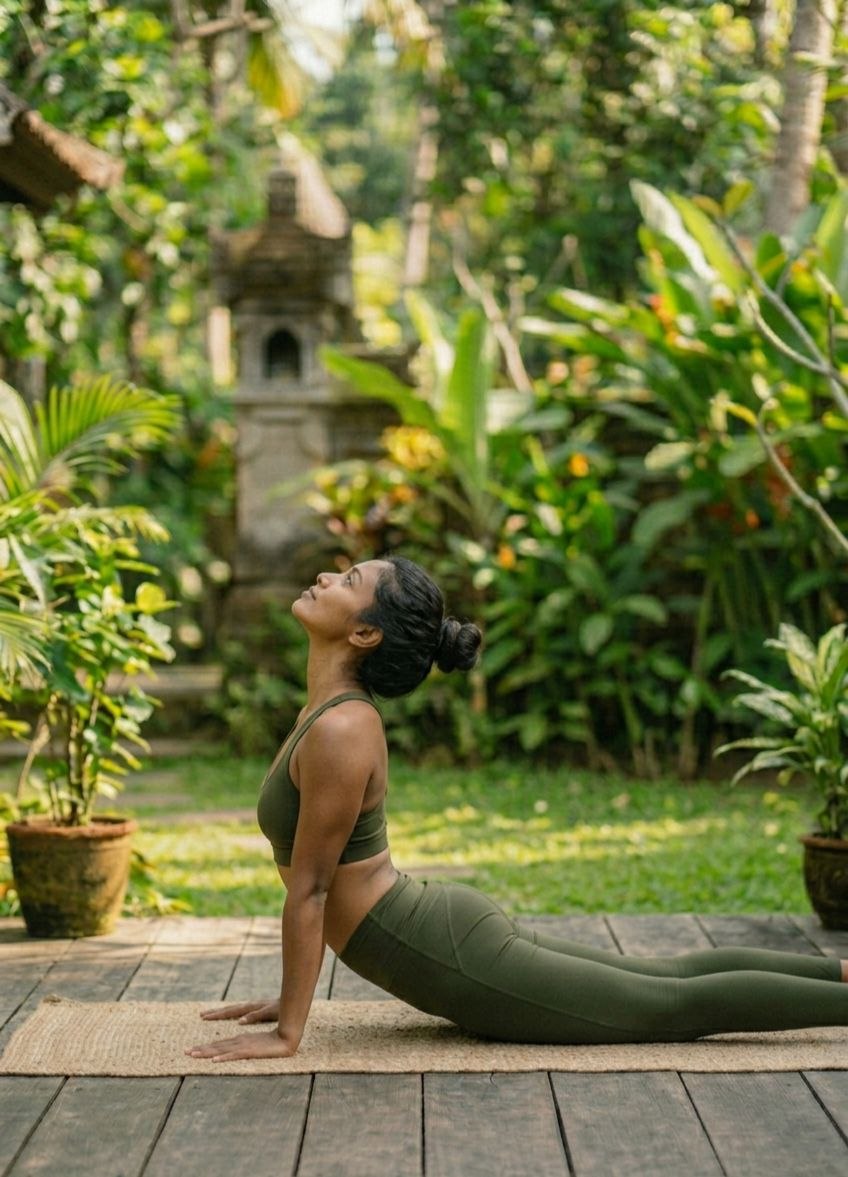
Lie on your stomach, hands under shoulders. Press tops of feet and pelvis into the floor. Inhale as you slowly lift your chest up using your back muscles (keep elbows bent slightly). Hold 10–15 seconds then lower.
Benefits:
Strengthens the spine and opens the chest and shoulders. Cobra counteracts the forward-hunch of modern life and gently stretches the abdominal muscles and hip flexors. It energizes the back muscles and may help alleviate mild back stiffness.
Frequently asked question (FAQ’s) :
FAQ 1: What is the best yoga pose for beginners at home?
Mountain Pose (Tadasana) is one of the best yoga poses for beginners because it helps improve posture, balance, and body awareness. It is simple to learn and serves as the foundation for many other yoga poses. Beginners can practice Mountain Pose daily to build confidence and prepare for more advanced movements.
FAQ 2: How long should beginners do yoga at home each day?
Beginners can start with 10 to 20 minutes of yoga daily. Consistent practice is more important than long sessions. Even a short routine that includes essential poses can improve flexibility, strength, posture, and mental well-being over time.
FAQ 3: Can I lose weight with beginner yoga at home?
Yes, beginner yoga can support weight loss when combined with a healthy diet and regular practice. Yoga helps burn calories, reduce stress-related eating, improve metabolism, and build muscle strength. As your fitness level improves, you can gradually move to more challenging yoga routines.
FAQ 4: Is it okay to do yoga at home without an instructor?
Yes, many beginners successfully practice yoga at home using step-by-step guides and videos. The key is to learn proper form, move slowly, and avoid pushing your body beyond its limits. Starting with simple poses helps reduce the risk of injury while building flexibility and confidence.
FAQ 5: What are the benefits of practicing yoga for beginners at home?
Practicing yoga at home offers many benefits, including improved flexibility, better posture, increased strength, reduced stress, enhanced balance, and improved overall health. Home yoga is also convenient, cost-effective, and allows beginners to learn at their own pace in a comfortable environment.
