

If your hips feel stiff after sitting at a desk all day, driving long distances, or finishing a workout, you’re not alone. Tight hips are one of the most common mobility issues affecting adults today. They can make everyday activities like walking, climbing stairs, bending over, or exercising feel uncomfortable and restricted.
The good news is that you don’t need expensive equipment or intense workouts to improve your hip mobility. Practicing yoga for tight hips can gently stretch the muscles surrounding your hips, increase flexibility, and help restore comfortable movement over time.
Whether you’re new to yoga or simply looking for an effective hip-opening routine, the seven beginner-friendly poses below can help you loosen tight muscles, reduce discomfort, and move more freely.
Yoga for Tight Hips: 7 Beginner-Friendly Poses to Improve Flexibility and Relieve Hip Pain
If your hips feel stiff after sitting at a desk all day, driving long distances, or finishing a workout, you’re not alone. Tight hips are one of the most common mobility issues affecting adults today. They can make everyday activities like walking, climbing stairs, bending over, or exercising feel uncomfortable and restricted.
The good news is that you don’t need expensive equipment or intense workouts to improve your hip mobility. Practicing yoga for tight hips can gently stretch the muscles surrounding your hips, increase flexibility, and help restore comfortable movement over time.
Whether you’re new to yoga or simply looking for an effective hip-opening routine, the seven beginner-friendly poses below can help you loosen tight muscles, reduce discomfort, and move more freely.
Why Do Hips Become Tight?
Your hips are surrounded by powerful muscles that help support your body whenever you walk, run, sit, or stand. Modern lifestyles often keep these muscles in shortened positions for hours each day, leading to stiffness and reduced mobility.
Common causes of tight hips include:
- Sitting for long periods
- Working at a desk
- Driving frequently
- Running or cycling without stretching
- Strength training without mobility work
- Poor posture
- Natural aging
Tight hips may also contribute to lower back discomfort, reduced athletic performance, poor posture, and limited flexibility.
Fortunately, consistent stretching and yoga can gradually restore healthy movement.
Benefits of Yoga for Tight Hips
Adding a few hip-opening poses to your weekly routine offers several benefits:
- Improves hip flexibility and range of motion
- Helps reduce stiffness after sitting
- Relieves tension in the hip flexors and glutes
- Supports better posture
- May ease lower back discomfort caused by tight hips
- Improves balance and body awareness
- Enhances athletic performance
- Promotes relaxation by releasing built-up muscle tension
The key is consistency rather than forcing deep stretches.
Safety Tips Before You Begin
Before starting these yoga poses, keep these tips in mind:
- Never stretch into sharp pain.
- Move slowly and breathe steadily.
- Hold each pose only as long as comfortable.
- Use yoga blocks, cushions, or folded blankets if needed.
- Stop immediately if you feel numbness or severe pain.
If you’ve recently had hip surgery or have a serious hip injury, consult your healthcare provider before beginning a new exercise program.
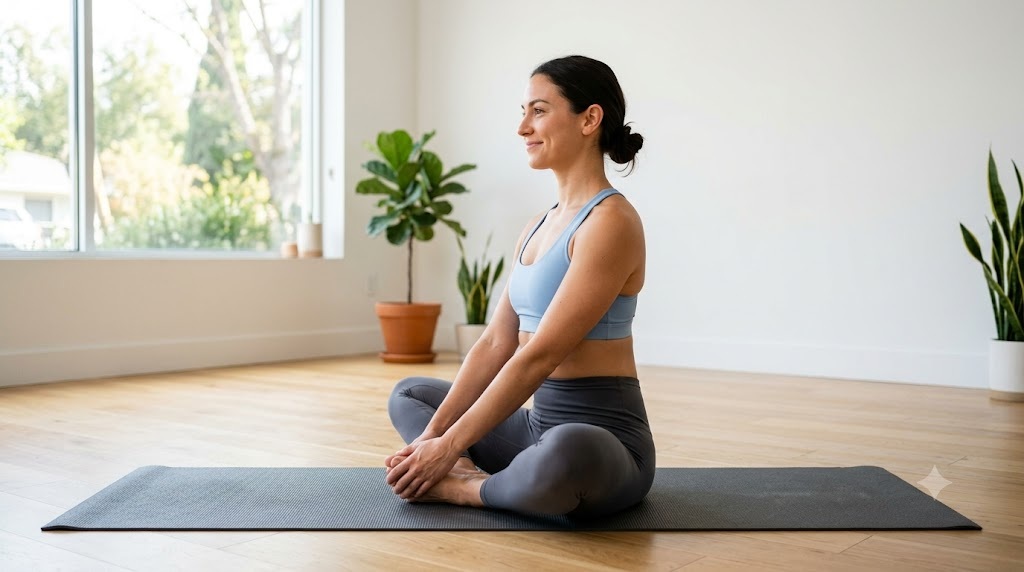
1. Butterfly Pose (Baddha Konasana)
Why It Helps
Butterfly Pose gently stretches the inner thighs, groin, and hip muscles. It’s an excellent beginner pose for gradually increasing hip flexibility.
How to Do It
- Sit tall on the floor.
- Bring the soles of your feet together.
- Allow your knees to fall outward naturally.
- Hold your feet with both hands.
- Lengthen your spine.
- Lean forward slightly while keeping your back straight.
Hold for 30–60 seconds.
Common Mistakes
- Rounding the back
- Pressing the knees downward
- Holding your breath
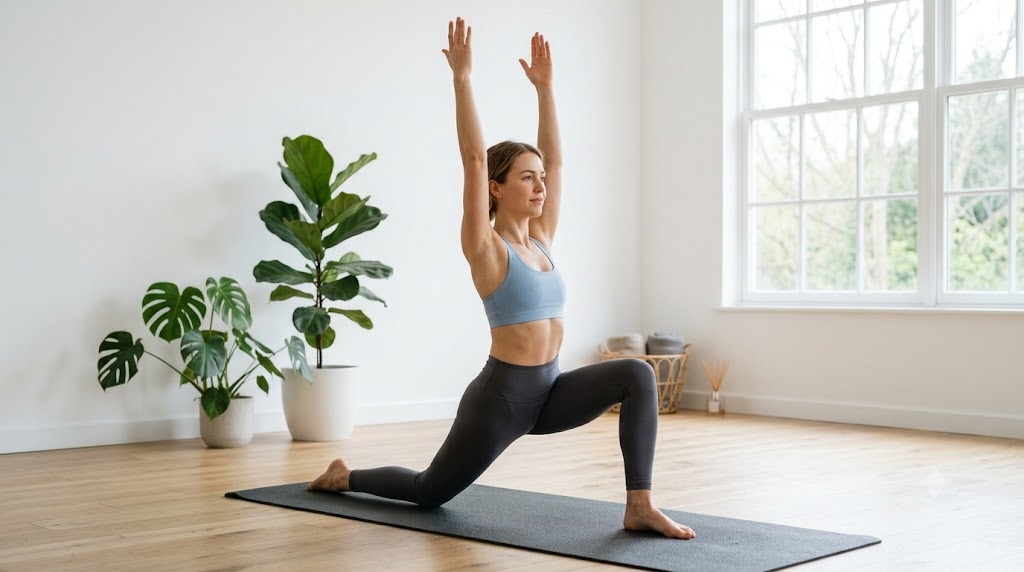
2. Low Lunge (Anjaneyasana)
Why It Helps
This pose targets tight hip flexors, which often become shortened after prolonged sitting.
How to Do It
- Begin in a lunge position.
- Lower your back knee to the floor.
- Shift your weight forward gently.
- Raise your arms overhead if comfortable.
- Keep your chest lifted.
Hold for 30 seconds per side.
Common Mistakes
- Letting the front knee move far past the toes
- Arching the lower back excessively
- Leaning forward instead of opening the hips
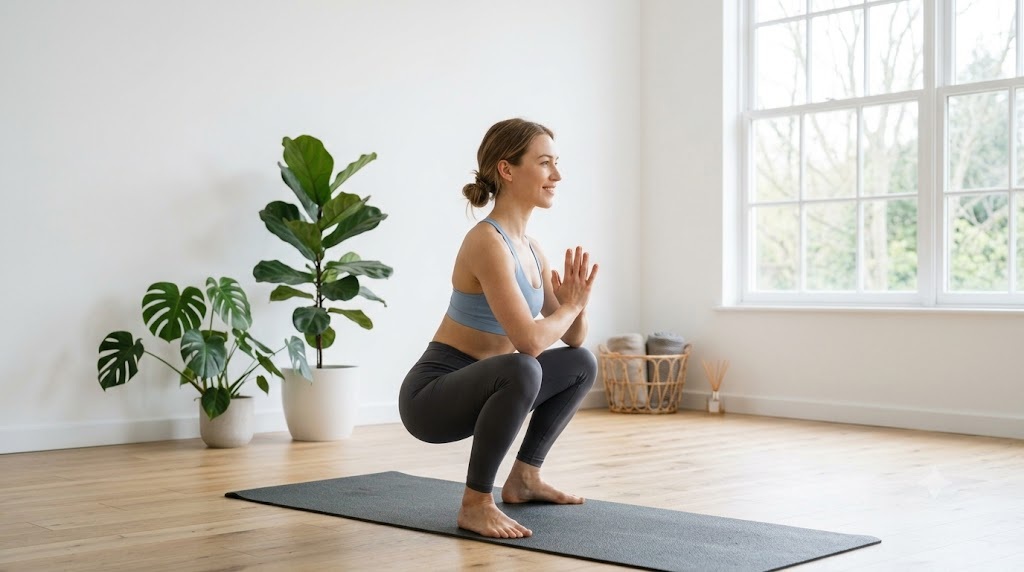
3. Garland Pose (Malasana)
Why It Helps
Garland Pose opens the hips while improving ankle mobility and lower-body flexibility.
How to Do It
- Stand with your feet slightly wider than shoulder-width apart.
- Lower into a deep squat.
- Bring your palms together.
- Use your elbows to gently press your knees apart.
- Keep your chest lifted.
Hold for 20–40 seconds.
Common Mistakes
- Lifting the heels
- Rounding the shoulders
- Collapsing the chest
Use a yoga block beneath your hips if needed.
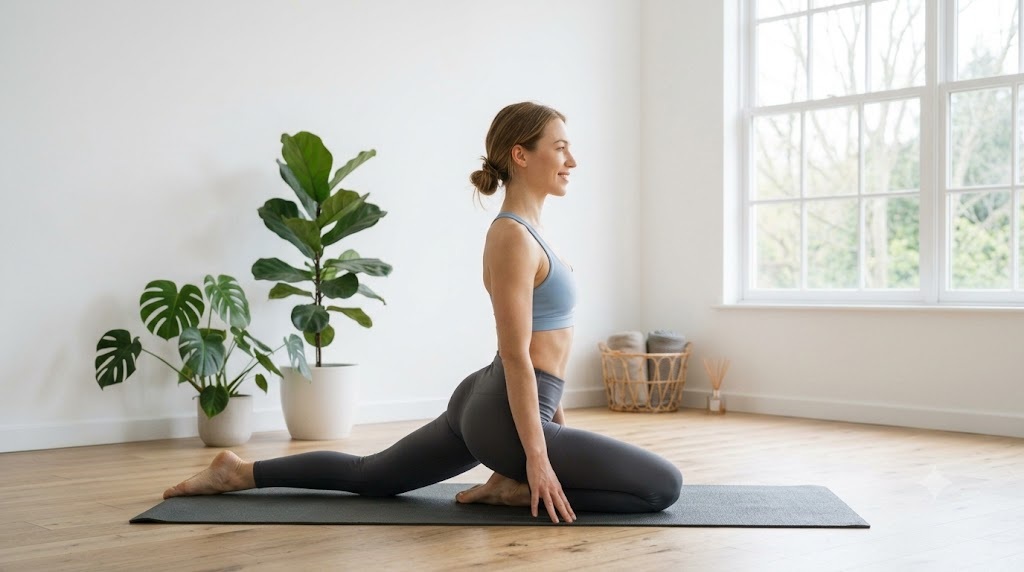
4. Pigeon Pose (Eka Pada Rajakapotasana)
Why It Helps
Pigeon Pose provides a deep stretch for the outer hips, glutes, and piriformis muscles.
How to Do It
- Start on all fours.
- Bring one knee toward the front of your mat.
- Extend the opposite leg behind you.
- Square your hips as much as possible.
- Fold forward if comfortable.
Hold for 30–60 seconds on each side.
Common Mistakes
- Twisting the hips
- Forcing the front knee into an uncomfortable position
- Holding tension in the shoulders
If the stretch feels too intense, place a folded blanket beneath your hip for support.
5. Figure Four Stretch
Why It Helps
This stretch targets the glutes, piriformis, and deep hip muscles, making it especially helpful for people who sit for long periods.
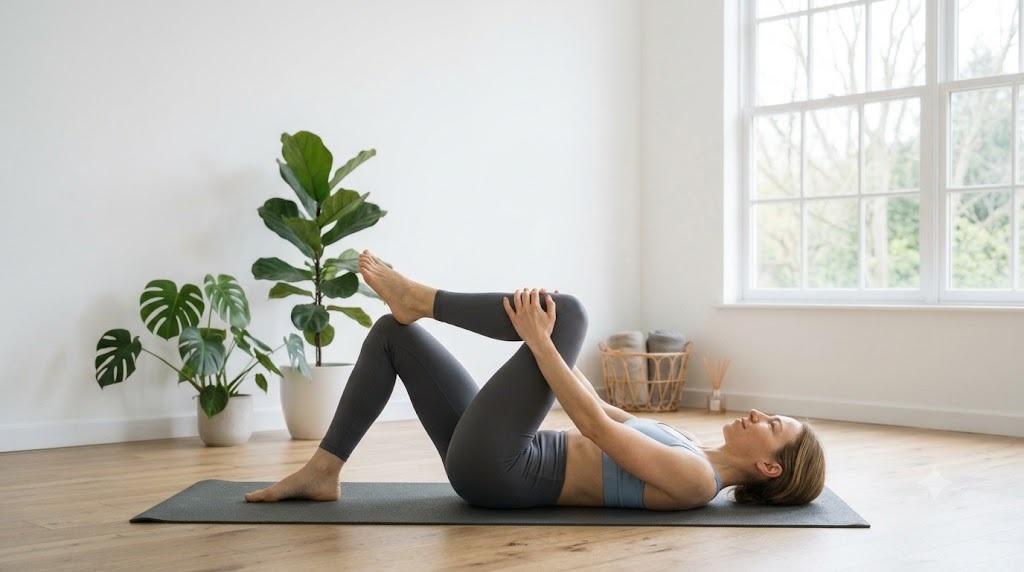
How to Do It
- Lie on your back.
- Cross your right ankle over your left thigh.
- Lift your left leg.
- Hold behind your left thigh.
- Gently pull your leg toward your chest.
Hold for 30–45 seconds, then switch sides.
Common Mistakes
- Pulling too aggressively
- Lifting the head and shoulders
- Holding your breath
6. Happy Baby Pose (Ananda Balasana)
Why It Helps
Happy Baby Pose gently stretches the hips while relaxing the lower back.
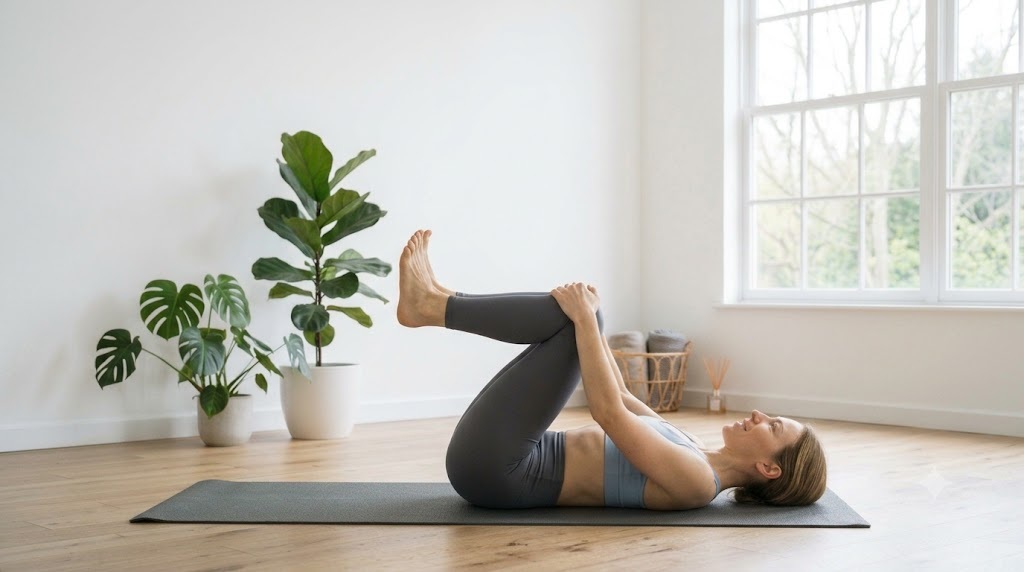
How to Do It
- Lie on your back.
- Bend both knees.
- Hold the outside of your feet.
- Draw your knees toward your armpits.
- Keep your lower back resting on the floor.
Hold for 30–60 seconds.
Common Mistakes
- Pulling the legs too forcefully
- Lifting the lower back
- Tensing the neck
7. Child’s Pose (Balasana)
Why It Helps
Child’s Pose gently relaxes the hips, thighs, and lower back while promoting deep breathing.
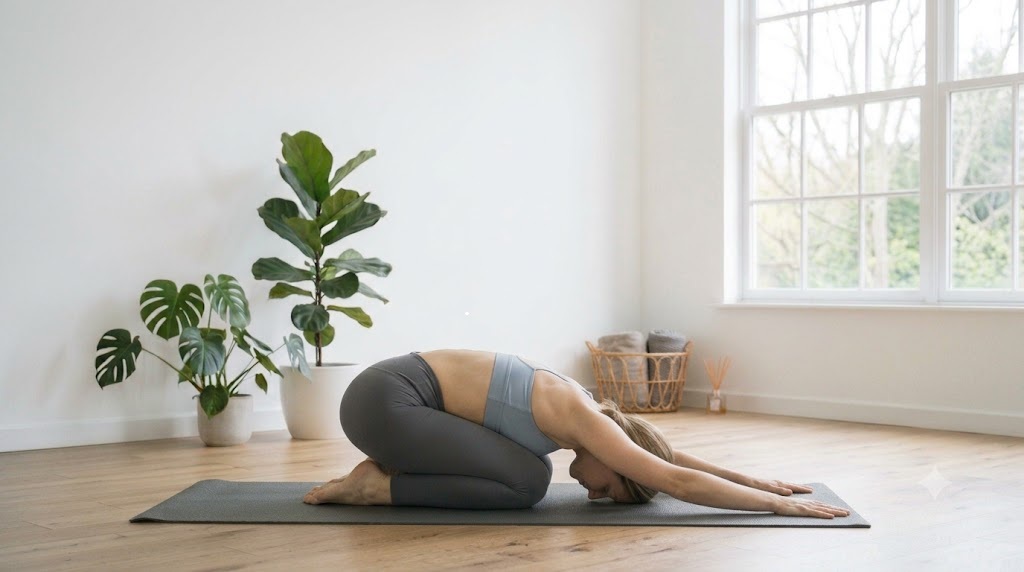
How to Do It
- Kneel on the floor.
- Sit back toward your heels.
- Stretch your arms forward.
- Lower your chest toward the floor.
- Rest your forehead comfortably.
Hold for 1–2 minutes.
Common Mistakes
- Holding tension in the shoulders
- Forcing your hips downward
- Breathing too quickly
A Simple 10-Minute Yoga Routine for Tight Hips
If you’re short on time, try this beginner-friendly routine:
- Butterfly Pose – 1 minute
- Low Lunge – 1 minute each side
- Garland Pose – 1 minute
- Pigeon Pose – 1 minute each side
- Figure Four Stretch – 45 seconds each side
- Happy Baby Pose – 1 minute
- Child’s Pose – 2 minutes
Practicing this routine three to five times per week can gradually improve hip flexibility and reduce stiffness.
Common Mistakes to Avoid
Many beginners try to stretch as deeply as possible, but flexibility develops gradually. Avoid these common mistakes:
- Skipping your warm-up
- Holding your breath
- Bouncing during stretches
- Pushing through pain
- Practicing inconsistently
- Ignoring proper alignment
Gentle, regular practice is far more effective than forcing difficult stretches.
Frequently Asked Questions
Can yoga really help tight hips?
Yes. Regular yoga can improve hip mobility, increase flexibility, and reduce muscle stiffness when practiced consistently.
How often should I do yoga for tight hips?
Most beginners benefit from practicing three to five times per week. Even a 10-minute routine can make a noticeable difference over time.
Why are my hips so tight after sitting all day?
Sitting keeps your hip flexors in a shortened position for long periods, which can lead to stiffness and reduced mobility.
Is it okay to practice hip-opening yoga every day?
For most healthy adults, gentle hip-opening yoga can be practiced daily as long as you avoid overstretching and listen to your body.
How long does it take to improve hip flexibility?
Some people notice reduced stiffness within a few weeks, while significant improvements in flexibility may take several months of regular practice.
Final Thoughts
Tight hips are incredibly common, especially if you spend much of your day sitting or performing repetitive activities. The encouraging news is that small, consistent efforts can lead to meaningful improvements in how your hips feel and move.
By incorporating these seven beginner-friendly yoga poses into your weekly routine, you can gradually improve flexibility, ease muscle tension, and support better posture and overall mobility. Remember that progress takes time—focus on gentle movement, steady breathing, and consistency rather than forcing deep stretches.
Whether you’re looking to move more comfortably, support your workouts, or simply reduce stiffness after long hours at a desk, yoga offers a simple and effective way to care for your hips naturally.
